
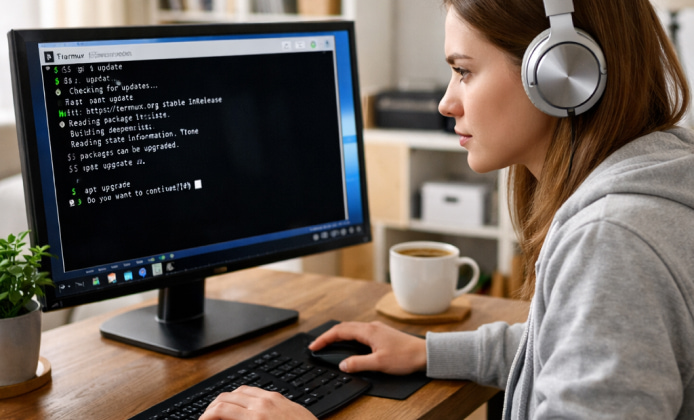
Mobile devices are powerful enough to support real development habits, but the path differs by platform and security model. For many power users, Termux on iPhone sounds like the perfect way to carry a Linux-style toolkit everywhere. Before you plan your setup, it helps to know that iOS is more locked down than Android, which shapes what “terminal apps” can actually do.
What You Can Realistically Do on Ios
When people say they want a terminal on Apple devices, they usually mean one of three goals: running shell commands, writing code, or managing remote servers.
- Local shell experience: file operations, basic utilities, scripting, text processing.
- Programming: Python/Node workflows, small projects, quick experiments, lightweight automation.
- Remote operations: SSH, Git over SSH, server maintenance, logs, container management from afar.
In practice, Termux on iOS is a phrase people use to describe the experience they want, even though the classic Android app model is not the same on Apple devices.
Tip: On iOS, the best results usually come from combining a local shell app with solid SSH tooling for anything heavy.
Best Ios-Friendly Alternatives That Feel “Termux-Like”
If your priority is running a Linux-ish userland locally, iOS apps typically provide a sandboxed environment that mimics common shell utilities. Many guides mention iPhone Termux as shorthand, but your real choice is which iOS terminal app matches your daily tasks.
- Local shell apps: Great for scripts, text tools, and quick edits, but limited by iOS sandbox rules.
- SSH-first apps: Best for serious administration because the heavy lifting happens on a remote machine.
- Hybrid setups: Local scripts + remote execution for builds, containers, and long-running services.
Where “Download” Advice Can Go Wrong
Some pages advertise Termux for iOS download links, and it’s smart to treat those claims carefully to avoid sideloading risks and fake packages.
- Use our fan website to download app.
- Avoid profiles, certificates, or “one-tap installers” from unknown sites.
- Check permissions and reviews, and confirm the developer identity.
Security and Privacy Checklist
Terminal apps can handle sensitive data like SSH keys, tokens, and config files, so a little hygiene prevents big headaches.
- Use a passcode or biometric lock on the device, and enable full-disk encryption (standard on modern iOS).
- Store SSH keys with strong passphrases, and prefer modern key types where supported.
- Use separate keys per device, and revoke keys immediately if a device is lost.
- Back up configs safely, but never paste secrets into public notes or screenshots.
In forums you may see iOS Termux discussed as if it’s one app, yet the safer approach is picking reputable tools and keeping secrets compartmentalized.
Tablet Workflows: iPad vs. Fire-Style Android Tablets
Tablets can be even better than phones for terminal work because split screen and larger keyboards reduce friction.
Tablet Workflows: iPad vs. Fire-Style Android Tablets
With the right keyboard and a good SSH client, remote development becomes comfortable, especially for Git operations and server tasks. On larger screens, Termux on iPad is often used to describe a “desktop-like” terminal workflow, even when the actual execution happens on a remote host.
- Use split view: terminal on one side, documentation or editor on the other.
- Keep a snippets file for common commands, but avoid storing secrets in plain text.
- Consider a small VPS or home server for builds and long jobs.
Fire Tablets: A Different Story
Amazon’s Fire devices are typically Android-based, which means you can often get closer to a native Termux experience than on iOS. On some models, Termux on Fire tablet can work well for learning Linux commands, running small scripts, and practicing Git basics on a budget device.
Note: Installation sources matter many users prefer trusted repositories and avoid random APK mirrors.
Quick Comparison Table
| Goal | Best approach on iPhone/iPad | Best approach on Android-based tablets |
|---|---|---|
| Run basic shell utilities locally | Use a reputable iOS shell app with sandboxed tools | Use a native terminal environment with package management |
| Program in Python/Node | Local scripting for small tasks + remote builds as needed | Local development for small projects, remote for heavy workloads |
| Server admin (SSH) | Dedicated SSH client + key management | SSH client or terminal with SSH tools |
| Long-running jobs | Run remotely (VPS/home server) and monitor from the device | Prefer remote, but local is sometimes feasible depending on device limits |
Recipe A: “Local notes + remote execution”
- Write scripts locally and store them in a dedicated project folder.
- Use SSH to run scripts on a remote machine where dependencies are easy to manage.
- Sync only what you need, and keep secrets on the remote host or in a secure vault.
Recipe B: “Tablet as a portable admin console”
- Pair a hardware keyboard and use split view for terminal + docs.
- Keep a small checklist: update keys, rotate tokens, verify known_hosts entries.
- Use mosh-like resilience if your network is unstable, when supported.
Fire Ecosystem Notes
Some users specifically look for Termux on Amazon Fire because it can turn a low-cost tablet into a lightweight learning and scripting machine for command-line basics.
- Use a trusted source for apps and updates, and keep the device patched.
- Start small: text processing, file management, and simple language runtimes.
- Offload heavy work to a server to prevent battery drain and overheating.
FAQ
- Can I get a full Linux distribution on iPhone or iPad? You can get parts of a Linux-like userland experience via sandboxed apps, but a full “desktop Linux” environment is usually better handled on a remote machine accessed by SSH.
- Is it worth using a tablet for terminal work? Yes, especially with a keyboard, because multitasking and larger screen real estate make documentation, editing, and command execution smoother.
- What should beginners start with? Start with safe basics: learn shell navigation, practice Git commands, and use SSH to interact with a remote environment where you can install packages freely.


 Termux Install Guide: Get a Linux-Like Terminal Running on Your PC
 Termux APK Guide: Safe App Installation & First Steps
 Run Termux on PC: Practical Ways to Use the Android Terminal on Desktop
 Termux on iOS (iPhone/iPad): Best Apps, Setup, and Safety Checklist
 What Is Termux and How to Use?
 Best Apps Similar to Termux